
Category: Blog

  • How to Build ADHD-Friendly Routines That Actually Stick

    How to Build ADHD-Friendly Routines That Actually Stick

    Creating routines for children with ADHD can feel overwhelming, especially when traditional schedules don’t work. This guide helps parents build ADHD-friendly routines that are flexible, realistic, and sustainable. Learn how to use visual supports, break tasks into manageable steps, plan for time blindness, and incorporate movement to improve focus and behavior. Discover how to reduce overwhelm, support emotional regulation, and create systems—not just schedules—that truly work for your child. With practical strategies and real-life tips, you’ll feel more confident helping your child build independence, consistency, and success in daily routines.

    Turning Chaos Into Consistency

    Parenting a child with Attention-Deficit/Hyperactivity Disorder often feels like trying to create order in constant motion.

    You want structure. Your child resists it.
    You create a plan. It falls apart.

    Sound familiar?

    Here’s the truth: routines can work for children with ADHD—but only when they are designed for how their brains function.

    This guide will show you how to create routines that are:

    • Flexible
    • Realistic
    • Sustainable

    And most importantly, effective.


    Why Traditional Routines Don’t Work for ADHD

    Many routines fail because they rely on skills ADHD children are still developing, like:

    • Working memory
    • Self-control
    • Time awareness

    Children with ADHD often struggle with:

    • Holding multiple steps in mind
    • Delaying gratification
    • Stopping one activity to start another

    So instead of expecting your child to adapt to the routine, the routine needs to adapt to your child, helping you feel more confident and supported.


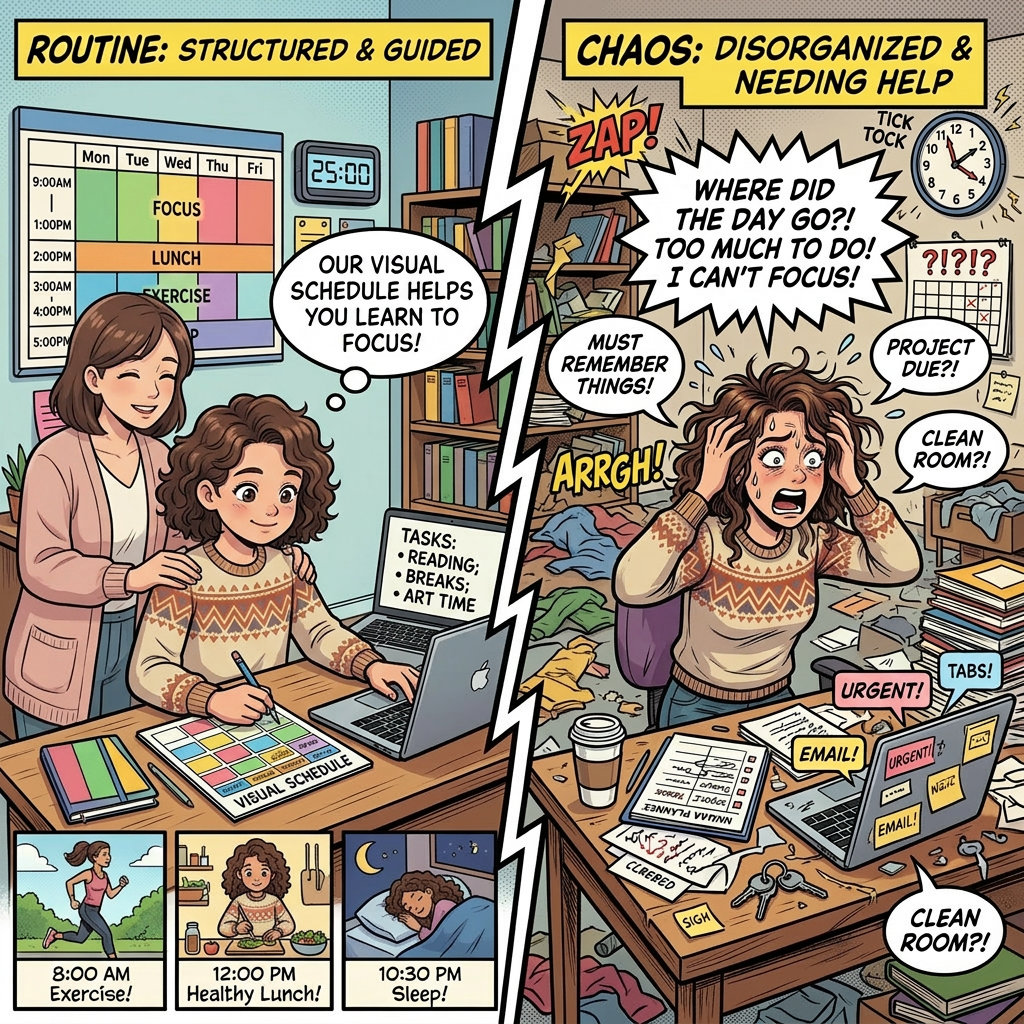
    Build Systems, Not Just Schedules

    A schedule tells you what to do.

    A system helps you actually do it.

    Effective ADHD routines include:

    • Visual supports
    • Timers
    • Environmental cues
    • Clear expectations

    Think of it this way: systems reduce the need for constant reminders.


    Use External Tools to Support Memory

    ADHD affects working memory, which means your child may forget instructions quickly.

    Support them with:

    • Checklists
    • Visual charts
    • Calendars
    • Phone reminders (for older kids)

    Post routines where your child can see them—not just hear them.


    Break Tasks Into the Smallest Steps Possible

    “Clean your room” is overwhelming.

    Instead, try:

    • Pick up clothes
    • Put toys in the bin
    • Make bed

    Small steps reduce overwhelm and increase success.


    Plan for Time Blindness

    Children with ADHD don’t experience time the same way.

    To help:

    • Use timers
    • Give time warnings
    • Show how long tasks take

    Timers also add urgency, which can improve focus.


    Create Flexible, Predictable Routines

    Structure is important—but rigidity isn’t helpful.

    Your routine should:

    • Stay consistent to
    • Allow flexibility in timing
    • Include buffer time

    Life happens. Build that into your plan.


    Make Sleep a Priority

    Sleep is critical for brain function.

    Children with ADHD often struggle with:

    • Falling asleep
    • Staying asleep

    Improve sleep by:

    • Creating a calming nighttime routine
    • Starting wind-down time early
    • Keeping the environment comfortable

    Better sleep leads to better behavior, focus, and mood.


    Use Motivation Strategically

    Motivation is often the missing piece.

    To increase it:

    • Add rewards
    • Celebrate progress
    • Connect tasks to positive feelings

    Ask your child:
    “What will it feel like when this is done?”

    This helps make the future feel more real—and motivating.


    Support Self-Control and Impulse Management

    Many children with ADHD struggle with impulse control.

    Teach:

    • Pause before acting
    • Think through choices
    • Finish one task before starting another

    This takes practice—and patience.


    Incorporate Movement Into Routines

    Movement helps regulate attention.

    Include:

    • Short activity breaks
    • Hands-on tasks
    • Opportunities to move

    Even small amounts of movement can improve focus.


    Watch for Overwhelm

    When children feel overwhelmed, routines fall apart.

    Signs include:

    • Meltdowns
    • Avoidance
    • Emotional outbursts

    When this happens:

    • Reduce demands
    • Slow things down
    • Offer support

    Regulation comes before routine.


    Be a Detective: Learn What Works

    Every child with ADHD is different, so consider their unique strengths and challenges when creating routines. Pay attention to what motivates them, distracts them, and when they focus best. Use this information to customize routines that truly support your child’s specific needs.

    Pay attention to:

    • What motivates them
    • What distracts them
    • When they focus best

    Use this information to adjust routines.


    Collaborate and Adjust

    Your child’s input matters.

    Work together to:

    • Create routines
    • Solve problems
    • Make adjustments

    Negotiation is part of the process.


    Use Weekly Planning

    Create a simple system:

    1. Start with fixed events (school, activities)
    2. Add important tasks
    3. Include breaks and downtime
    4. Review and adjust weekly

    Planning reduces stress during the week.


    Keep It Simple and Sustainable

    The best routine is one you can maintain.

    Focus on:

    • Clarity
    • Simplicity
    • Consistency

    Avoid overcomplicating the process.


    Embrace Imperfection

    You will:

    • Forget things
    • Lose track of time
    • Have off days

    That’s normal.

    Model resilience by:

    • Laughing at mistakes
    • Trying again
    • Staying flexible

    Your child learns more from your response than your routine.


    Final Thoughts: Routine as a Tool for Growth

    Routines are not about control—they’re about support.

    When done well, they:

    • Reduce stress
    • Build independence
    • Strengthen confidence

    As you build routines, remember:

    You’re not just creating structure—you’re helping your child understand how their brain works.

    And that’s a skill they’ll carry for life.
  • ADHD Routines for Kids: Why Structure Matters and How to Make It Work

    ADHD Routines for Kids: Why Structure Matters and How to Make It Work

    Discover why routines are essential for kids with ADHD and how to create simple, flexible systems that improve focus, reduce stress, and build confidence. Learn practical strategies for mornings, homework, and bedtime.

    Why Routines Matter for Kids with ADHD

    “As a child, routine gives us a feeling of safety. As adults, it gives us a feeling of purpose.” — Brianna Wiest

    If you’re parenting a child with ADHD, you’ve probably noticed that daily life can feel unpredictable. One moment, your child is focused and engaged, and the next, they’re completely off track. This isn’t a lack of effort. It’s how the ADHD brain works.

    Children with Attention-Deficit/Hyperactivity Disorder often struggle with attention, time management, and task completion. That’s why routines aren’t just helpful—they’re essential.

    But here’s the key: routines for kids with ADHD shouldn’t feel rigid or restrictive. Instead, they should be flexible, supportive systems that guide your child while honoring how their brain functions.

    As a parent, you set the tone. With the right approach, routines can transform chaos into calm and frustration into success.


    Understanding the ADHD Brain and Routine Challenges

    Before creating a routine, it’s important to understand what your child is up against.

    Kids with ADHD often:

    • Struggle to remember multi-step directions
    • Experience time as “now” or “not now.”
    • Have a low tolerance for boredom
    • Need higher levels of stimulation or reward
    • Find transitions especially difficult

    This means that simply telling your child what to do—or repeating instructions—usually won’t work.

    Instead, routines need to be:

    • Visible
    • Structured
    • Broken into small steps
    • Reinforced consistently

    Think of routines as external supports for an internal challenge.


    Start Small: Build Routines One Step at a Time

    One of the biggest mistakes parents make is trying to fix everything at once.

    Instead:

    • Choose one or two goals
    • Keep them simple and achievable
    • Build success before adding more

    For example, instead of “get ready for school,” break it down:

    • Wake up
    • Get dressed
    • Brush teeth
    • Eat breakfast
    • Pack backpack

    When routines are broken into manageable steps, your child is more likely to follow through—and feel successful.


    Externalize Everything: Make Routines Visible

    Children with ADHD often cannot hold a sequence of tasks in their minds. That’s why visual supports are powerful tools.

    Try:

    • Picture charts for younger children
    • Written checklists for older kids
    • Sticky notes as reminders
    • Whiteboards for daily routines

    Add checkboxes next to each task. This gives your child a sense of accomplishment as they move through their routine.

    Timers are another essential tool. They help combat time blindness and make abstract concepts like “five minutes” more concrete.


    Create Predictable Daily Anchors

    Instead of trying to control every moment, focus on anchor points in the day.

    Morning Routine

    Mornings can be especially challenging.

    Helpful strategies:

    • Use music or TV shows as time cues
    • Break tasks into small steps
    • Keep the order consistent
    • Prepare as much as possible the night before

    Consistency matters more than perfection.


    Homework Routine

    Homework can feel like a battle—for both you and your child.

    Make it easier by:

    • Creating a distraction-limited workspace
    • Starting with a quick planning session
    • Using short work intervals (like 10 minutes on, 2 minutes off)
    • Adjusting supervision based on your child’s needs

    Some children benefit from a “body double”—simply having you nearby while they work.

    End with a closing routine to signal completion.


    Bedtime Routine

    Bedtime struggles are incredibly common with ADHD.

    Start thinking of bedtime as a nighttime routine that begins at least an hour before sleep.

    Try:

    • Lowering lights
    • Turning off screens
    • Playing calming music
    • Engaging in quiet activities

    Whether your child prefers complete silence or a sound machine, do what works best for them.

    Better sleep leads to:

    • Improved mood
    • Better focus
    • Reduced ADHD symptoms

    Know Your Child’s Natural Rhythm

    Every child has different energy patterns throughout the day.

    Pay attention to:

    • When your child is most focused
    • When they’re mentally tired
    • When they recover energy

    Schedule demanding tasks during peak times and easier activities during low-energy periods.

    Working with your child’s rhythm—not against it—makes routines far more effective.


    Use Incentives to Boost Motivation

    Rewards highly drive the ADHD brain.

    Without an emotional connection, tasks can feel impossible.

    Try:

    • Reward systems
    • Verbal praise
    • Visual progress trackers

    You can also ask:
    “What will it feel like when you’re done?”

    Helping your child imagine that positive feeling increases motivation and follow-through.


    Teach Mental Rehearsal

    Mental rehearsal is a powerful but often overlooked tool.

    It involves:

    • Visualizing completing a task
    • Imagining each step
    • Practicing success in the mind

    This strengthens neural pathways and builds confidence.

    Encourage your child to “practice in their brain” before starting a routine.


    Expect Imperfection—and Use It as a Tool

    Failure isn’t the problem—rigid expectations are.

    Routines will:

    • Break down
    • Need adjustments
    • Sometimes fail completely

    That’s okay.

    Use these moments to:

    • Identify what didn’t work
    • Adjust expectations
    • Try again with new strategies

    Progress, not perfection, is the goal.


    Support Transitions and Time Management

    Transitions are one of the hardest parts of ADHD.

    Make them easier by:

    • Giving warnings (“5 minutes left”)
    • Using timers
    • Adding buffer time between tasks

    Always include grace periods. Things will take longer—and that’s normal.


    Create an ADHD-Friendly Environment

    Your home environment can either support or sabotage routines.

    Helpful changes:

    • Create a “launch pad” near the door for essentials
    • Assign a home for frequently used items
    • Label drawers and bins
    • Reduce unnecessary distractions

    The goal is to make the environment do some of the work.


    Encourage Movement and Activity

    Movement isn’t a distraction—it’s a tool.

    Research and experience show that:

    • 10 minutes of physical activity before a task improves focus
    • Fidgeting can help with concentration
    • Alternating tasks prevents burnout

    Let your child move. It helps their brain engage.


    Practice Conscious Parenting

    Effective routine-building starts with awareness.

    Focus on:

    • Understanding how ADHD impacts behavior
    • Adjusting expectations based on development
    • Using positive, supportive communication

    Think of yourself as a detective—learning what works best for your child.


    Collaborate With Your Child

    Routines work best when children feel involved.

    Ask:

    • What works for you?
    • What feels hard?
    • What would make this easier?

    You may not always agree—but collaboration builds buy-in.

    And buy-in increases success.


    Final Thoughts: Routines Are Allies, Not Enemies

    As Penn Holderness and Kim Holderness say, routines are not the enemy of ADHD—they’re allies.

    When done right, routines:

    • Reduce stress
    • Increase independence
    • Build confidence

    Start small. Stay flexible. Keep going.

    Because the truth is simple:

    Life gets easier when your child knows what’s coming next.

  • Talking to Your Child with ADHD: 5 Simple Strategies for Better Communication

    Talking to Your Child with ADHD: 5 Simple Strategies for Better Communication

    Summary: Learn 5 simple, effective ways to communicate with a child with ADHD. Improve listening, reduce stress, and build a stronger connection at home with easy strategies for parents.

    Parenting a child with ADHD presents a unique blend of excitement and challenges. Children with ADHD often display a remarkable abundance of energy, curiosity, and creativity. While these qualities can enhance the joy of daily life, they may occasionally complicate communication.

    It is crucial to engage in clear, kind, and consistent communication that aligns with your child’s age and developmental stage. This approach creates a sense of calm, confidence, and understanding in your child. When children feel recognized and understood, they are more likely to develop a strong sense of confidence and connection with their parents.

    Here are 5 simple strategies to help improve communication with your child.


    1. Give Clear & Simple Instructions

    Kids with ADHD do best with simple steps and short directions. Long explanations can feel overwhelming, or your child may get lost in the details.

    Remember, patience and consistency are key to helping your child succeed.

    Tips:

    • Use simple words
    • Give one instruction at a time.
    • Be direct and brief
    • Make eye contact
    • Show tasks instead of just explaining
    • Ask them to repeat instructions.
    • Reflect what they say to show you listen.

    Clear instructions help your child follow directions and feel confident. When a child succeeds at what is asked of them, they feel less stressed and more successful.


    2. Use Positive & Encouraging Words 

    The way we speak to children matters. The words you choose can boost confidence and cooperation, helping you feel more hopeful about your impact. Positive language teaches your child to:

    • Believe in themselves
    • Stay motivated
    • Work well with others.
    • Handle challenges positively
    • Build trust and connection with you. 

    Positive words help kids feel capable and supported. And they also create space for connection rather than conflict. 


    3. Help with Common Communication Struggles

    Kids with ADHD may struggle with things like interrupting, talking too much, or missing parts of conversations. These are skills they are still learning.

    Interrupting

    Kids may interrupt because they are afraid they will forget what they want to say.

    Try teaching them:

    • Raise a hand
    • Write it down
    • Count to 3 before speaking

    Oversharing

    Some kids may share too much in the wrong situations. You can gently teach:

    • What is private
    • What is okay to share with friends
    • What is okay to share with adults

    Not listening fully

    Sometimes kids hear you but don’t process everything.

    Try:

    • Saying their name first
    • Getting eye contact
    • Using a gentle touch on the shoulder
    • Asking them to repeat back what they heard

    These small steps help improve understanding.


    4. Focusing on small steps at home 

    Communication is a skill. And like any skill, it gets better with practice. You can build strong communication at home by practicing small moments every day. This can help you feel a sense of progress and motivate you to keep going.

    Daily practice makes a big difference:

    • Model calm talking and listening
    • Practice give-and-take conversations
    • Encourage thinking before speaking.
    • Use eye contact and gentle touch.h
    • Ask for repeat-backs to confirm understanding.

    Even a few minutes a day can help your child improve over time.

    Remember, small steps lead to big growth.


    5. Grow Together

    Strong communication is not just about behavior. It is about connection.

    Clear, positive communication builds trust, confidence, and connection. Be prepared to address emotional reactions calmly and openly, helping your child feel safe and supported to express their feelings. When your child feels safe and supported, they are more likely to listen, talk, and share their feelings.

    You can help by:

    • Staying calm during emotional moments
    • Listening without interrupting
    • Helping your child name their feelings
    • Praising effort, not just results
    • Celebrating small wins

    Your child is still learning how to manage big feelings. Your calm support teaches them how to handle emotions in a healthy way.


    Final Thoughts

    Communication with a child who has ADHD is not about being perfect. It’s about being intentional, clear, consistent, and patient. Some days will feel easier than others. That is normal. What matters most is showing up, trying again, and staying connected.

    When you use clear directions, positive language, and calm responses, you are doing more than managing behavior; you are teaching lifelong skills. You are teaching your child how to communicate, regulate emotions, and build healthy relationships

    Progress may feel slow at times, and some days will be harder than others. That is normal. What matters most is the connection you build through consistent, supportive communication.

    Remember:
    Your child is not trying to be difficult. They are learning how to navigate a world that can feel overwhelming. With your guidance, patience, and encouragement, they can develop the skills they need to express themselves, listen, and grow in confidence.

    Every calm conversation, every moment of understanding, and every small success helps your child feel seen, supported, and capable, and that foundation can last a lifetime. With your support, they can grow into a confident, capable communicator 💛